
Distribution orders help move products between different store locations or between stores and distribution centers without involving sales prices. This process ensures accurate inventory tracking when receiving goods that were issued from another location. This guide explains how to complete product receptions using the SSMS user interface when goods arrive at your store.
Access reception tasks
Log into the SSMS application on your mobile device using your assigned credentials.
Navigate to the 'Receive' section. If you have reception tasks assigned to you, a red notification bubble will appear on the 'Receive' button showing the number of pending tasks.
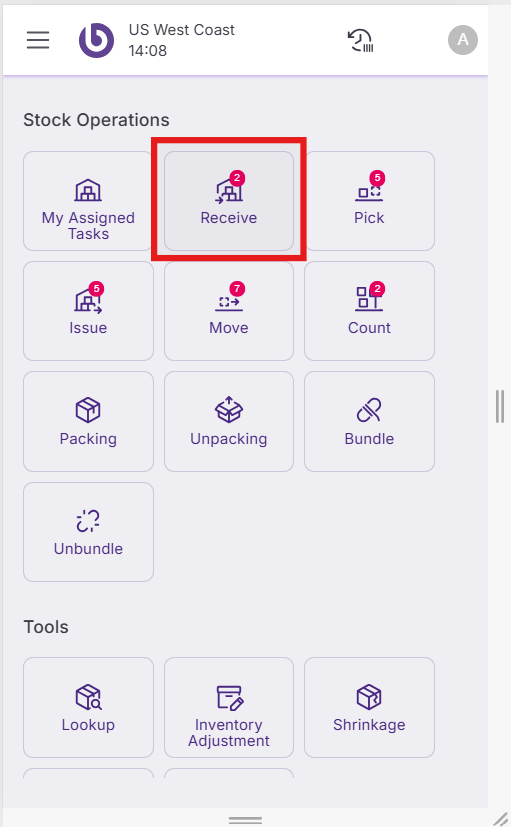
If no red bubble appears, you can still create and assign reception tasks to yourself using the process described in the following sections.
Receive from existing documents
When you need to receive products based on a distribution order that was already created in the back office, follow these steps:
Tap 'New receive' from the main Receive screen.
Select 'From document' to work with an existing distribution order.
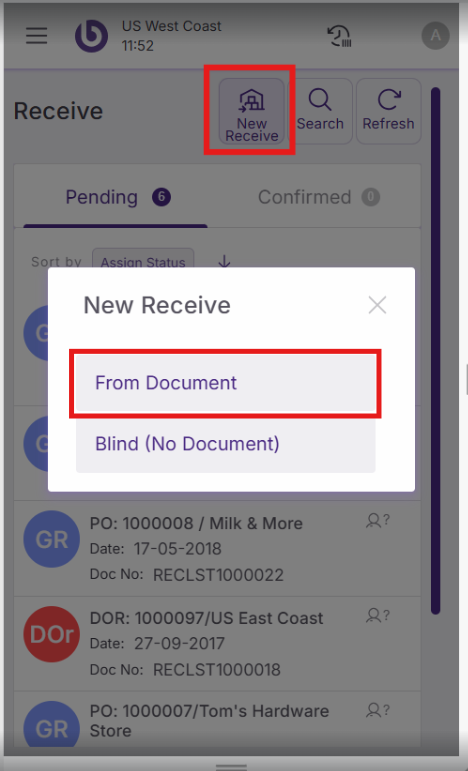
The 'New receive from document' popup will appear on your screen.
Tap 'Document number' to view all available distribution orders, Purchase order and Delivery note.
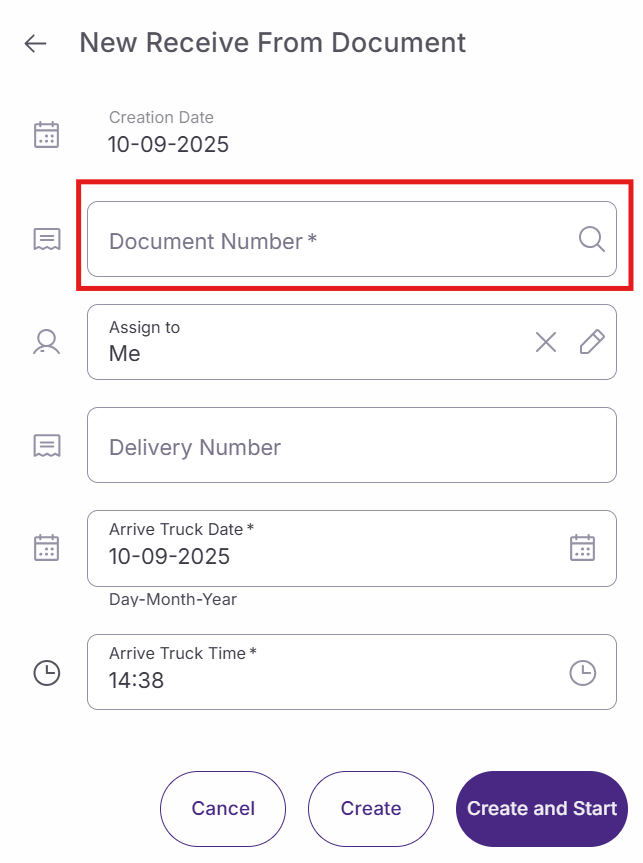
Select the appropriate distribution order receipt (DOr) from the list and tap 'Create and start'.
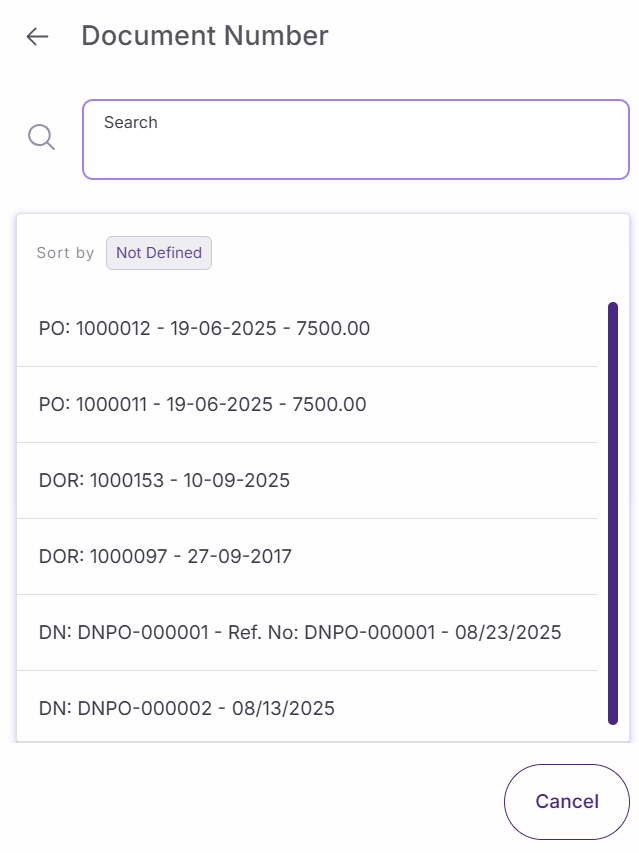
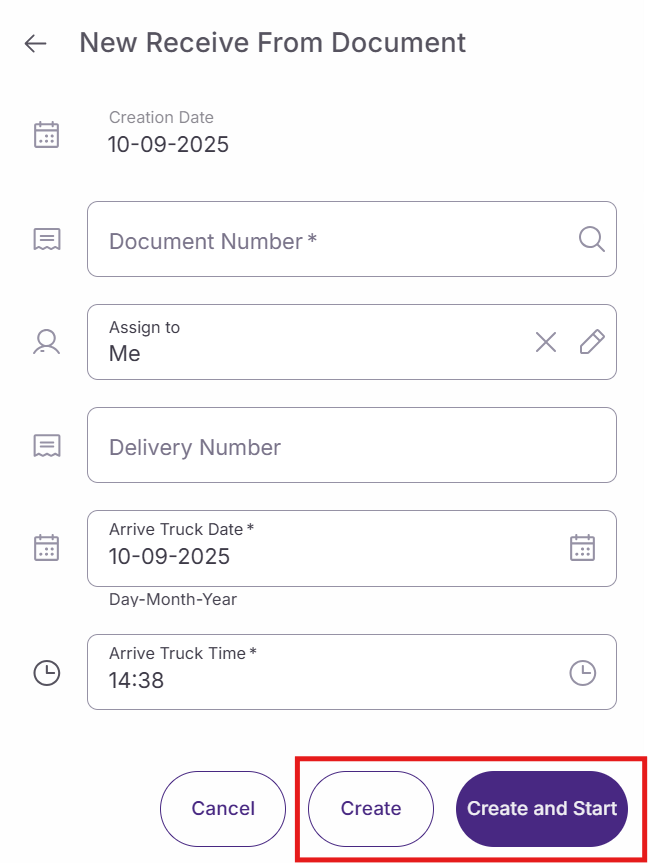
The system will generate reception tasks and assign them to you automatically.
Complete reception tasks
Once tasks are created, they will appear in the 'Receive' section of your application.
Tap on the distribution order receipt you want to process.
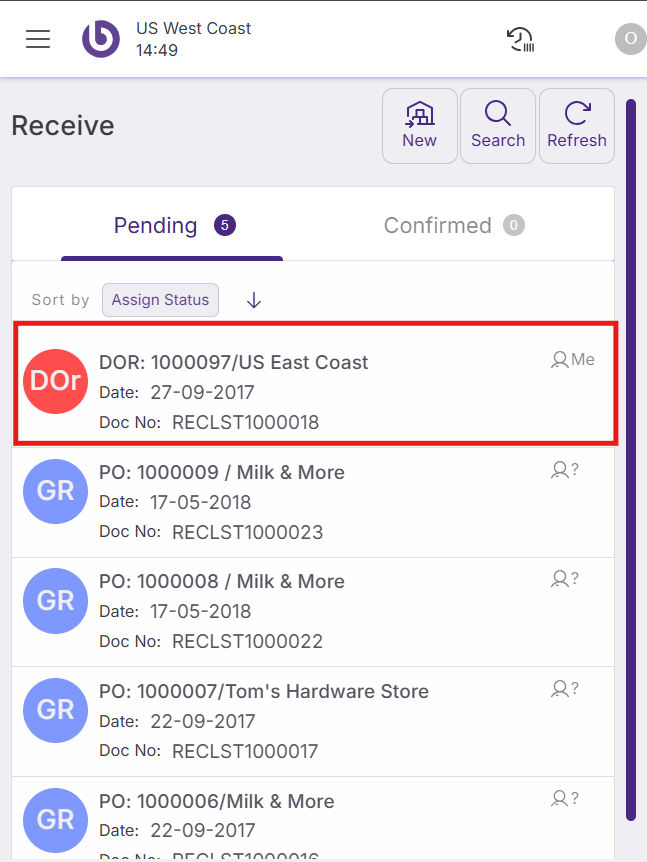
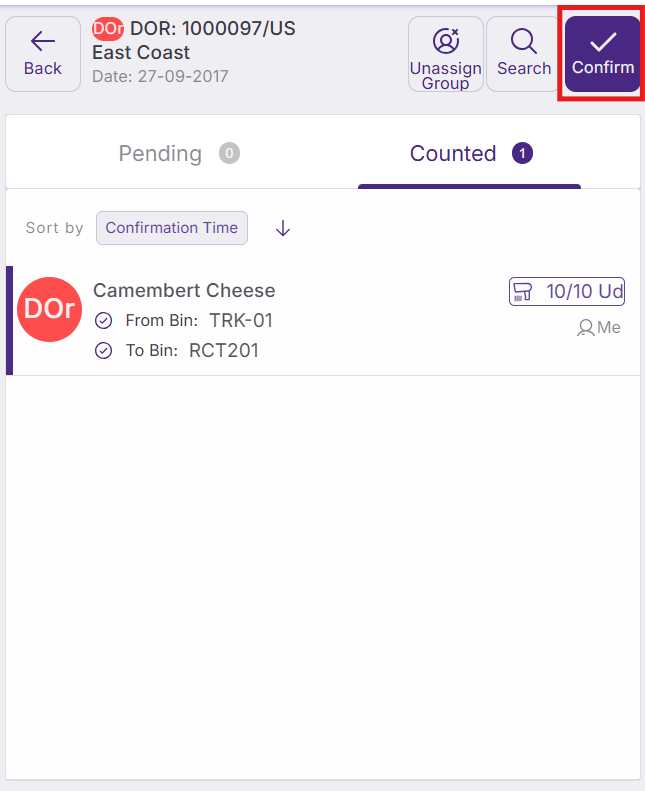
When the configuration is Set by default the expected quantity, navigate to the 'Counted' tab to view the reception task details. The line was automatically counted. Otherwise stay in Pending tab, you need to count the line manually.
Tap on the specific task to open the product counting interface.
Enter the actual quantity received for each product and tap 'Apply' to save your counts.
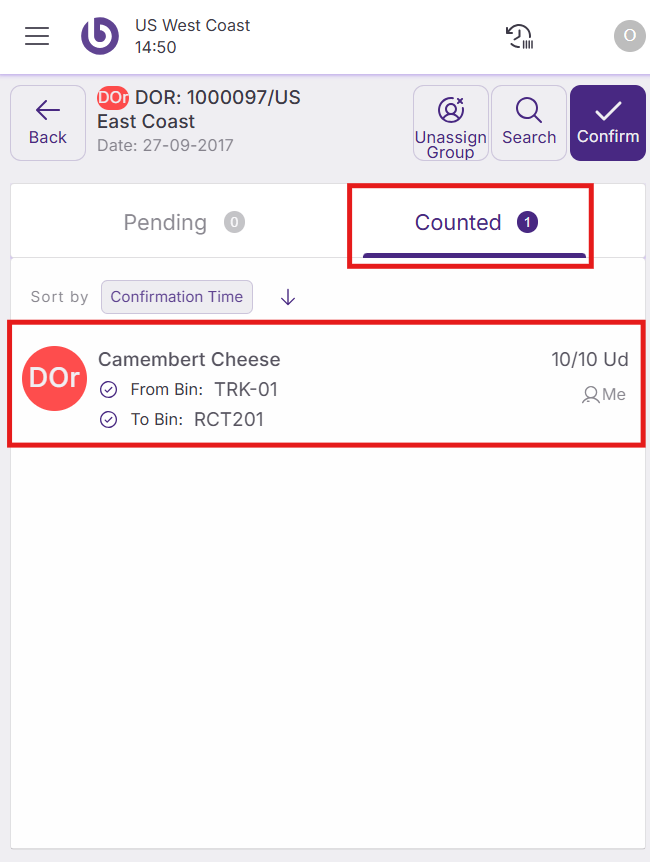
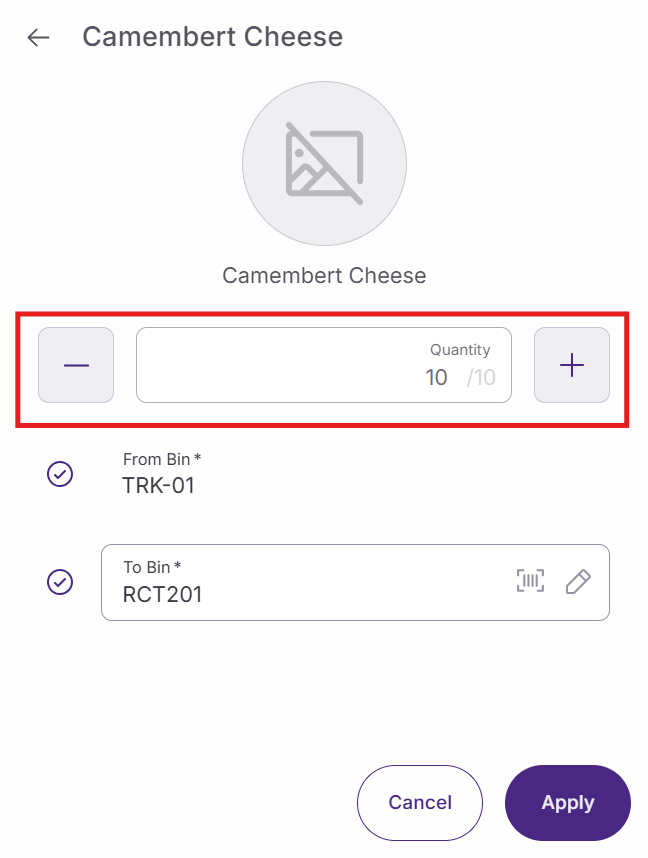
Review your entered quantities and tap 'Confirm' to finalize the reception.
The system will automatically update the product stock levels once the task is confirmed.
Manage discrepancies
If the counted amount is different (higher or lower) than the expected one, the task will stay in the ‘Pending’ tab with an orange warning icon. If a non-expected item is scanned, it will be added to the ‘Pending’ tab with the orange icon.
When all the received items are counted, the receive tasks can be confirmed using the ‘Confirm Tasks’ button.
If there are discrepancies during the confirmation, the ‘Discrepancies Detected’ screen will be opened, and an action must be selected for each product with discrepancies.


For ‘Missing’ discrepancies, the following options are available:
-
Confirm partially and continue later. To confirm the task with the specified quantity (3/5, for example) and automatically create another task created in available status for the remaining amount (2/2, in this case) so it can be confirmed later once the remaining units arrive.
-
Propose a different option. To confirm the task with the specified quantity and automatically create another task in available status, for the remaining amount, in another bin.
-
Raise Stock Incident. To select a reason for the incident. Different types of actions can be performed based on the selected reason.
The ‘Apply to remaining lines with Missing discrepancies’ checkbox is used to apply the selected action to all the ‘Missing’ discrepancies.
For ‘Exceeding’ discrepancies, only the option ‘Raise Stock Incident’ will be available.
Once the necessary actions and reasons have been selected, click the 'Apply' button to save the changes and close the task. Closed tasks will disappear from the front end but can be checked from the back office, in the ‘Reception List’ window.
When the Distribution order receipt is confirmed, it is moved to the section ‘Confirmed’ in the ‘Receive’ and ‘My Assigned Task’ screens. They can also be checked in the back office, in the ‘Distribution order receipt’ window.
If defined, the goods receipt tasks can also consider tolerances to accept variations in the number of counted items.